
logo
Send Message
Products
PRODUCTS DETAILS
Home > Products >
UL 1026 Handle Strength Test for Slow Cookers

UL 1026 Handle Strength Test for Slow Cookers

MOQ: 1
Price: To be quoted
Standard Packaging: safety carton pack or plywood box
Delivery Period: 25 working days
Payment Method: T/T
Supply Capacity: 3 sets per month
Detail Information
Place of Origin
China
Brand Name
KingPo
Certification
Calibration Certificate
Model Number
KP-DH22
Standard:
UL 1026 Clause 58
Test Time:
50000
Maximum Load:
60kg
Height Of Lift:
305mm
Speed:
1 Times/s
Power:
220V 50/60HZ
Highlight:

UL 1026 slow cooker tester

,

handle strength test equipment

,

slow cooker cable testing

Product Description
UL 1026 Handle Strength Test for Slow Cookers
1. Scope
This technical specification defines the complete procedures and requirements for testing the handle strength of slow cookers in accordance with UL 1026 "Safety of Household Electric Cooking and Food Serving Appliances" Clause 58. The tests are divided into heating base handles (58.3), separate cooking vessel handles (58.4), dynamic cyclic loading (58.5), and ambient temperature repeat test (58.6), ensuring that handles do not fail under high temperature, full load, and cyclic use conditions.
Compliance: Fully adheres to UL 1026 (2021 edition) Clause 58.3–58.6 original requirements.
2. Reference Standard Original Quotes (UL 1026 Clause 58.3–58.6)
58.3 To evaluate the handles of the heating base, a slow cooker is to be loaded so that the handles support a weight equivalent to three times the total weight of: the unit, lid, and separate cooking vessel (if present) filled with water to the overflow capacity. To arrive at the appropriate test load, each component of this test is to be weighed individually, added to the total, and the total multiplied by three. The test load is to be distributed so that the normal horizontal center of gravity is not changed.
58.4 To evaluate the handles of a separate cooking vessel, the cooking vessel is to be loaded so that the handles support a weight equivalent to three times the total weight of: the vessel plus the weight of water equal to the maximum overflow capacity of water. The test load is to be distributed so that the normal horizontal center of gravity is not changed.
58.5 The weighted slow cooker is to be mounted to a test fixture such that the handle is held over a 2 – 4 inch (51 – 102 mm) wide gripping area and centered over the intended gripping area. Due to limitations of handle design, a smaller width gripping area may be used. If more than one handle is employed, the weight is to be distributed between the handles. The test fixture shall provide a dynamic load upon the handles by lifting the slow cooker at least 12 inches (305 mm) in 1 second of time and then lowering the slow cooker. The test is to be performed while the slow cooker is in a well heated condition and energized at the test voltage in 41.1.14, at the setting producing the highest handle temperatures during the Normal Temperature Test, Section 41. The dynamic loading test shall be repeated for a total of 5000 cycles.
58.6 The test in 58.5, is to be repeated with a separate sample of a slow cooker unenergized at ambient temperature.
3. Test Equipment
Equipment Specification Requirements
Dynamic Cyclic Test Machine Lift stroke ≥ 305 mm, lift time ≤ 1 second, cycle frequency 1 cycle/second, max load ≥ 60 kg
Clamping Device Width 51–102 mm (adjustable), centered on gripping area, equal load for multiple handles
Weighing System Resolution 1 g, accuracy ±0.1%
Temperature Control System Maintain Clause 41 highest handle temperature ±5°C
Data Logging Real-time recording of force-displacement-temperature-cycle count
4. Test Samples and Preparation
Item Requirements
Sample Quantity 6 units (3 units for 58.5 high-temperature energized test, 3 units for 58.6 ambient unenergized repeat test)
Pre-treatment Weigh each unit independently: base + lid + vessel + full water (overflow capacity) → total weight × 3
Separate Cooking Vessel Test Vessel + full water (overflow capacity) × 3
Energized Preheating Operate per Clause 41.1.14 at highest handle temperature setting until thermally stable (≥2 hours)

5. Test Procedures (Corresponding to UL Original Article by Article)

  1. 5.1 Heating Base Handle Test (58.3)
    1. Weigh: base + lid + vessel + full water (overflow capacity) = W₁
    2. Test load = 3 × W₁
    3. Distribute load evenly, maintain horizontal center of gravity unchanged
    4. Fix to test fixture, gripping width 51–102 mm
    5. Perform 58.5 dynamic cycling
  2. 5.2 Separate Cooking Vessel Handle Test (58.4)
    1. Weigh: vessel + full water (overflow capacity) = W₂
    2. Test load = 3 × W₂
    3. Distribute load evenly, maintain horizontal center of gravity unchanged
    4. Clamp vessel handles, perform 58.5 dynamic cycling
  3. 5.3 Dynamic Cyclic Test (58.5) — High-Temperature Energized
    • Sample state: Energized, highest handle temperature setting, thermally stable
    • Clamping: 51–102 mm wide, centered on gripping area
    • Action: 305 mm lift (≤1 second) → slow lowering
    • Cycles: 5000 times
    • Monitoring: handle temperature, deformation, cracks, force attenuation
  4. 5.4 Ambient Repeat Test (58.6) — Unenergized
    • Use new samples
    • Ambient temperature: 23 ± 5°C
    • Other conditions same as 58.5
    • Cycles: 5000 times

6. Acceptance Criteria

Item Pass Criteria
Handle Integrity No breakage, separation, or permanent deformation
Deformation Amount ≤ 5 mm (visual + vernier caliper)
Force Attenuation Throughout ≤ 10%
Electrical Safety No insulation damage or grounding failure
Cycle Completion 5000 cycles without failure
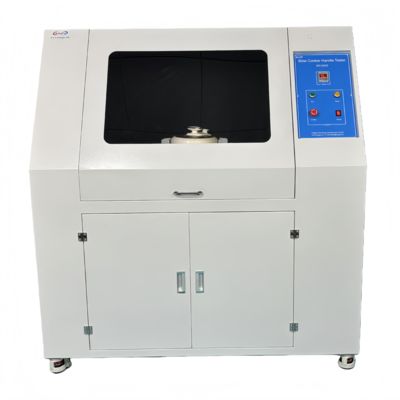
The test machine is based on UL 1026 Clause58 standard.
UL 1026 Handle Strength Test for Slow Cookers 0
Technical Parameters
  • Working power: AC220V 50/60HZ
  • Rise height: 305mm
  • Rising speed: 1 s/ time
  • Test time: 0- 99999

UL 1026 Handle Strength Test for Slow Cookers 1

UL 1026 Handle Strength Test for Slow Cookers 2

7. FAQ (Frequently Asked Questions)

Q1: Why is the cycle count 5000 times instead of 50,000 times?

A: UL 1026 Clause 58.5 explicitly specifies 5000 cycles (not 50,000). Early versions or misreading of IEC 60335-2-15 may cause confusion. This specification follows the UL 1026 original text.

Q2: Is separate testing required for lid handles?

A: No. 58.3 and 58.4 only target heating base handles and separate cooking vessel handles. If lid handles are auxiliary grips, they are included in the base test load.

Q3: Can the gripping width be less than 51 mm?

A: Yes. The original text allows: “Due to limitations of handle design, a smaller width gripping area may be used.” Record the actual width and archive photos.

Q4: How to distribute load for multiple handles?

A: Proportionally evenly divide the total weight, ensure balanced force on each handle, maintain overall center of gravity unchanged.

Q5: In high-temperature testing, how to maintain “highest handle temperature”?

A: First perform Clause 41 normal temperature test, record highest stable temperature for each handle. In 58.5 test, energize and operate under the same setting, monitor handle temperature in real-time, use insulation cover if necessary to maintain ±5°C.

Q6: How to achieve the “3 times full load” test load?

A: Use water + counterweights or dedicated load simulator. Count each gram of water as 1 g weight, align counterweight centers with original center of gravity.

Q7: Is video recording required?

A: Strongly recommended. Especially record the 1st, 2500th, and 5000th lift processes for failure analysis.

Q8: Can the samples after high-temperature test (58.5) be used for ambient test (58.6)?

A: No. 58.6 explicitly requires “a separate sample”, must use brand new samples.

Products
PRODUCTS DETAILS
UL 1026 Handle Strength Test for Slow Cookers
MOQ: 1
Price: To be quoted
Standard Packaging: safety carton pack or plywood box
Delivery Period: 25 working days
Payment Method: T/T
Supply Capacity: 3 sets per month
Detail Information
Place of Origin
China
Brand Name
KingPo
Certification
Calibration Certificate
Model Number
KP-DH22
Standard:
UL 1026 Clause 58
Test Time:
50000
Maximum Load:
60kg
Height Of Lift:
305mm
Speed:
1 Times/s
Power:
220V 50/60HZ
Minimum Order Quantity:
1
Price:
To be quoted
Packaging Details:
safety carton pack or plywood box
Delivery Time:
25 working days
Payment Terms:
T/T
Supply Ability:
3 sets per month
Highlight

UL 1026 slow cooker tester

,

handle strength test equipment

,

slow cooker cable testing

Product Description
UL 1026 Handle Strength Test for Slow Cookers
1. Scope
This technical specification defines the complete procedures and requirements for testing the handle strength of slow cookers in accordance with UL 1026 "Safety of Household Electric Cooking and Food Serving Appliances" Clause 58. The tests are divided into heating base handles (58.3), separate cooking vessel handles (58.4), dynamic cyclic loading (58.5), and ambient temperature repeat test (58.6), ensuring that handles do not fail under high temperature, full load, and cyclic use conditions.
Compliance: Fully adheres to UL 1026 (2021 edition) Clause 58.3–58.6 original requirements.
2. Reference Standard Original Quotes (UL 1026 Clause 58.3–58.6)
58.3 To evaluate the handles of the heating base, a slow cooker is to be loaded so that the handles support a weight equivalent to three times the total weight of: the unit, lid, and separate cooking vessel (if present) filled with water to the overflow capacity. To arrive at the appropriate test load, each component of this test is to be weighed individually, added to the total, and the total multiplied by three. The test load is to be distributed so that the normal horizontal center of gravity is not changed.
58.4 To evaluate the handles of a separate cooking vessel, the cooking vessel is to be loaded so that the handles support a weight equivalent to three times the total weight of: the vessel plus the weight of water equal to the maximum overflow capacity of water. The test load is to be distributed so that the normal horizontal center of gravity is not changed.
58.5 The weighted slow cooker is to be mounted to a test fixture such that the handle is held over a 2 – 4 inch (51 – 102 mm) wide gripping area and centered over the intended gripping area. Due to limitations of handle design, a smaller width gripping area may be used. If more than one handle is employed, the weight is to be distributed between the handles. The test fixture shall provide a dynamic load upon the handles by lifting the slow cooker at least 12 inches (305 mm) in 1 second of time and then lowering the slow cooker. The test is to be performed while the slow cooker is in a well heated condition and energized at the test voltage in 41.1.14, at the setting producing the highest handle temperatures during the Normal Temperature Test, Section 41. The dynamic loading test shall be repeated for a total of 5000 cycles.
58.6 The test in 58.5, is to be repeated with a separate sample of a slow cooker unenergized at ambient temperature.
3. Test Equipment
Equipment Specification Requirements
Dynamic Cyclic Test Machine Lift stroke ≥ 305 mm, lift time ≤ 1 second, cycle frequency 1 cycle/second, max load ≥ 60 kg
Clamping Device Width 51–102 mm (adjustable), centered on gripping area, equal load for multiple handles
Weighing System Resolution 1 g, accuracy ±0.1%
Temperature Control System Maintain Clause 41 highest handle temperature ±5°C
Data Logging Real-time recording of force-displacement-temperature-cycle count
4. Test Samples and Preparation
Item Requirements
Sample Quantity 6 units (3 units for 58.5 high-temperature energized test, 3 units for 58.6 ambient unenergized repeat test)
Pre-treatment Weigh each unit independently: base + lid + vessel + full water (overflow capacity) → total weight × 3
Separate Cooking Vessel Test Vessel + full water (overflow capacity) × 3
Energized Preheating Operate per Clause 41.1.14 at highest handle temperature setting until thermally stable (≥2 hours)

5. Test Procedures (Corresponding to UL Original Article by Article)

  1. 5.1 Heating Base Handle Test (58.3)
    1. Weigh: base + lid + vessel + full water (overflow capacity) = W₁
    2. Test load = 3 × W₁
    3. Distribute load evenly, maintain horizontal center of gravity unchanged
    4. Fix to test fixture, gripping width 51–102 mm
    5. Perform 58.5 dynamic cycling
  2. 5.2 Separate Cooking Vessel Handle Test (58.4)
    1. Weigh: vessel + full water (overflow capacity) = W₂
    2. Test load = 3 × W₂
    3. Distribute load evenly, maintain horizontal center of gravity unchanged
    4. Clamp vessel handles, perform 58.5 dynamic cycling
  3. 5.3 Dynamic Cyclic Test (58.5) — High-Temperature Energized
    • Sample state: Energized, highest handle temperature setting, thermally stable
    • Clamping: 51–102 mm wide, centered on gripping area
    • Action: 305 mm lift (≤1 second) → slow lowering
    • Cycles: 5000 times
    • Monitoring: handle temperature, deformation, cracks, force attenuation
  4. 5.4 Ambient Repeat Test (58.6) — Unenergized
    • Use new samples
    • Ambient temperature: 23 ± 5°C
    • Other conditions same as 58.5
    • Cycles: 5000 times

6. Acceptance Criteria

Item Pass Criteria
Handle Integrity No breakage, separation, or permanent deformation
Deformation Amount ≤ 5 mm (visual + vernier caliper)
Force Attenuation Throughout ≤ 10%
Electrical Safety No insulation damage or grounding failure
Cycle Completion 5000 cycles without failure
The test machine is based on UL 1026 Clause58 standard.
UL 1026 Handle Strength Test for Slow Cookers 0
Technical Parameters
  • Working power: AC220V 50/60HZ
  • Rise height: 305mm
  • Rising speed: 1 s/ time
  • Test time: 0- 99999

UL 1026 Handle Strength Test for Slow Cookers 1

UL 1026 Handle Strength Test for Slow Cookers 2

7. FAQ (Frequently Asked Questions)

Q1: Why is the cycle count 5000 times instead of 50,000 times?

A: UL 1026 Clause 58.5 explicitly specifies 5000 cycles (not 50,000). Early versions or misreading of IEC 60335-2-15 may cause confusion. This specification follows the UL 1026 original text.

Q2: Is separate testing required for lid handles?

A: No. 58.3 and 58.4 only target heating base handles and separate cooking vessel handles. If lid handles are auxiliary grips, they are included in the base test load.

Q3: Can the gripping width be less than 51 mm?

A: Yes. The original text allows: “Due to limitations of handle design, a smaller width gripping area may be used.” Record the actual width and archive photos.

Q4: How to distribute load for multiple handles?

A: Proportionally evenly divide the total weight, ensure balanced force on each handle, maintain overall center of gravity unchanged.

Q5: In high-temperature testing, how to maintain “highest handle temperature”?

A: First perform Clause 41 normal temperature test, record highest stable temperature for each handle. In 58.5 test, energize and operate under the same setting, monitor handle temperature in real-time, use insulation cover if necessary to maintain ±5°C.

Q6: How to achieve the “3 times full load” test load?

A: Use water + counterweights or dedicated load simulator. Count each gram of water as 1 g weight, align counterweight centers with original center of gravity.

Q7: Is video recording required?

A: Strongly recommended. Especially record the 1st, 2500th, and 5000th lift processes for failure analysis.

Q8: Can the samples after high-temperature test (58.5) be used for ambient test (58.6)?

A: No. 58.6 explicitly requires “a separate sample”, must use brand new samples.