
logo
Send Message
products
PRODUCTS DETAILS
Home > Products >
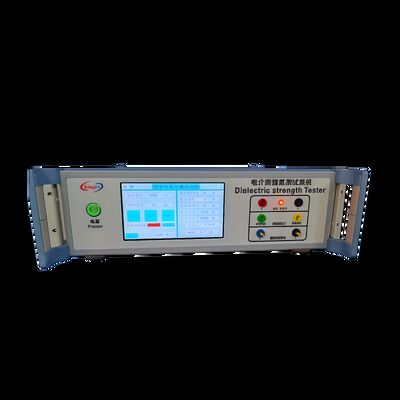
KP-1230S Dielectric Strength Tester for Quadripolar Connector Testing with Monophasic Truncated Exponential Waveform Compliant with ISO 27186:2020

KP-1230S Dielectric Strength Tester for Quadripolar Connector Testing with Monophasic Truncated Exponential Waveform Compliant with ISO 27186:2020

MOQ: 1
Delivery Period: 20
Payment Method: T/T
Detail Information
Highlight:

ISO 27186:2020 Compliant Dielectric Strength Tester

,

Monophasic Truncated Exponential Waveform Medical Test Equipment

,

Quadripolar Connector Testing Defibrillation Waveform Tester

Product Description
KP-1230S Dielectric Strength Tester Compliant with ISO 27186:2020 Annex C
Product Overview
The KP-1230S Dielectric Strength Tester is a professional test instrument designed to generate test pulses for evaluating quadripolar connector systems in active implantable medical devices. Engineered in strict accordance with YY/T 0972-2016 Appendix C requirements, this system tests whether implantable cardiac rhythm management devices experience permanent damage when subjected to truncated exponential defibrillation waveforms and high-voltage pulse currents, and whether device settings can be restored through reprogramming.
Dielectric Strength Tester, Defibrillation Waveform Testing, ISO 27186, YY/T 0972, Quadripolar Connector Testing, Implantable Cardiac Device Testing
Measured Waveform Data (Monophasic Truncated Exponential Wave)
Parameter Specification Value Description
Test Signal Rise Time 1.4 μs Fast rise time to simulate real defibrillation shocks
dV/dt 1.08 kV/μs Voltage rate of change
Peak Voltage 1.53 kV Maximum output voltage
Pulse Duration 18 ms Total pulse width
Peak Voltage Decay Requirement >50% of peak value after 18 ms Complies with truncated exponential waveform decay characteristics
Get Instant Quote
Application Scenarios
  • Medical Device R&D and Validation: Defibrillation resistance testing of connector systems in implantable pacemakers, ICDs, and CRT devices to ensure compliance with safety standards before market release.
  • Third-Party Testing Laboratories: Providing compliance certification testing services for manufacturers, supporting ISO 27186 and YY/T 0972 standard reports.
  • Quality Control and Production Testing: End-of-line sampling testing to verify dielectric strength and reprogramming recovery of batch products.
  • Clinical Simulation Research: Studying the effects of defibrillation shocks on implantable devices to optimize designs and improve patient safety.
In clinical practice, patients may receive external or internal defibrillation therapy. This system helps ensure that implanted devices will not suffer permanent damage under such high-voltage conditions, thereby protecting patient lives.
Technical Specifications
  • Output Waveform Type: Monophasic Truncated Exponential Waveform
  • Voltage Range: Adjustable, up to 2 kV (standard configuration 1.53 kV)
  • Pulse Energy: Simulates clinical defibrillator output
  • Load Adaptability: Supports standard test loads simulating human body impedance
  • Power Requirements: AC 220V ±10%, 50/60 Hz
  • Dimensions and Weight: Compact desktop design (specific dimensions vary by model)
  • Environmental Requirements: Operating temperature 10-40°C, humidity <80%
These parameters ensure that the system output waveform fully meets the standard requirements for defibrillation protection testing.
Frequently Asked Questions
Which standards does the KP-1230S system support?
The system is specifically designed for YY/T 0972-2016 (Appendix C) and ISO 27186:2020, used for defibrillation waveform endurance testing of quadripolar connector systems.
Does the test waveform comply with monophasic truncated exponential wave requirements?
Yes, the measured peak voltage of 1.53 kV, duration of 18 ms, and decay characteristic >50% of peak value fully match the standard waveform.
Does the system support biphasic waveforms?
The current version focuses on monophasic truncated exponential waveforms. Biphasic waveform support is available upon request for customization.
How is testing safety ensured?
The system incorporates multiple protection mechanisms, including high-voltage isolation, emergency stop button, and automatic discharge function.
How to verify device recovery after testing?
After testing, the device under test can be reprogrammed using a programmer to check if normal function is restored—this is a key step in standard evaluation.
Does the system require periodic calibration?
Annual calibration by a professional organization is recommended to maintain waveform accuracy.
products
PRODUCTS DETAILS
KP-1230S Dielectric Strength Tester for Quadripolar Connector Testing with Monophasic Truncated Exponential Waveform Compliant with ISO 27186:2020
MOQ: 1
Delivery Period: 20
Payment Method: T/T
Detail Information
Minimum Order Quantity:
1
Delivery Time:
20
Payment Terms:
T/T
Highlight

ISO 27186:2020 Compliant Dielectric Strength Tester

,

Monophasic Truncated Exponential Waveform Medical Test Equipment

,

Quadripolar Connector Testing Defibrillation Waveform Tester

Product Description
KP-1230S Dielectric Strength Tester Compliant with ISO 27186:2020 Annex C
Product Overview
The KP-1230S Dielectric Strength Tester is a professional test instrument designed to generate test pulses for evaluating quadripolar connector systems in active implantable medical devices. Engineered in strict accordance with YY/T 0972-2016 Appendix C requirements, this system tests whether implantable cardiac rhythm management devices experience permanent damage when subjected to truncated exponential defibrillation waveforms and high-voltage pulse currents, and whether device settings can be restored through reprogramming.
Dielectric Strength Tester, Defibrillation Waveform Testing, ISO 27186, YY/T 0972, Quadripolar Connector Testing, Implantable Cardiac Device Testing
Measured Waveform Data (Monophasic Truncated Exponential Wave)
Parameter Specification Value Description
Test Signal Rise Time 1.4 μs Fast rise time to simulate real defibrillation shocks
dV/dt 1.08 kV/μs Voltage rate of change
Peak Voltage 1.53 kV Maximum output voltage
Pulse Duration 18 ms Total pulse width
Peak Voltage Decay Requirement >50% of peak value after 18 ms Complies with truncated exponential waveform decay characteristics
Get Instant Quote
Application Scenarios
  • Medical Device R&D and Validation: Defibrillation resistance testing of connector systems in implantable pacemakers, ICDs, and CRT devices to ensure compliance with safety standards before market release.
  • Third-Party Testing Laboratories: Providing compliance certification testing services for manufacturers, supporting ISO 27186 and YY/T 0972 standard reports.
  • Quality Control and Production Testing: End-of-line sampling testing to verify dielectric strength and reprogramming recovery of batch products.
  • Clinical Simulation Research: Studying the effects of defibrillation shocks on implantable devices to optimize designs and improve patient safety.
In clinical practice, patients may receive external or internal defibrillation therapy. This system helps ensure that implanted devices will not suffer permanent damage under such high-voltage conditions, thereby protecting patient lives.
Technical Specifications
  • Output Waveform Type: Monophasic Truncated Exponential Waveform
  • Voltage Range: Adjustable, up to 2 kV (standard configuration 1.53 kV)
  • Pulse Energy: Simulates clinical defibrillator output
  • Load Adaptability: Supports standard test loads simulating human body impedance
  • Power Requirements: AC 220V ±10%, 50/60 Hz
  • Dimensions and Weight: Compact desktop design (specific dimensions vary by model)
  • Environmental Requirements: Operating temperature 10-40°C, humidity <80%
These parameters ensure that the system output waveform fully meets the standard requirements for defibrillation protection testing.
Frequently Asked Questions
Which standards does the KP-1230S system support?
The system is specifically designed for YY/T 0972-2016 (Appendix C) and ISO 27186:2020, used for defibrillation waveform endurance testing of quadripolar connector systems.
Does the test waveform comply with monophasic truncated exponential wave requirements?
Yes, the measured peak voltage of 1.53 kV, duration of 18 ms, and decay characteristic >50% of peak value fully match the standard waveform.
Does the system support biphasic waveforms?
The current version focuses on monophasic truncated exponential waveforms. Biphasic waveform support is available upon request for customization.
How is testing safety ensured?
The system incorporates multiple protection mechanisms, including high-voltage isolation, emergency stop button, and automatic discharge function.
How to verify device recovery after testing?
After testing, the device under test can be reprogrammed using a programmer to check if normal function is restored—this is a key step in standard evaluation.
Does the system require periodic calibration?
Annual calibration by a professional organization is recommended to maintain waveform accuracy.